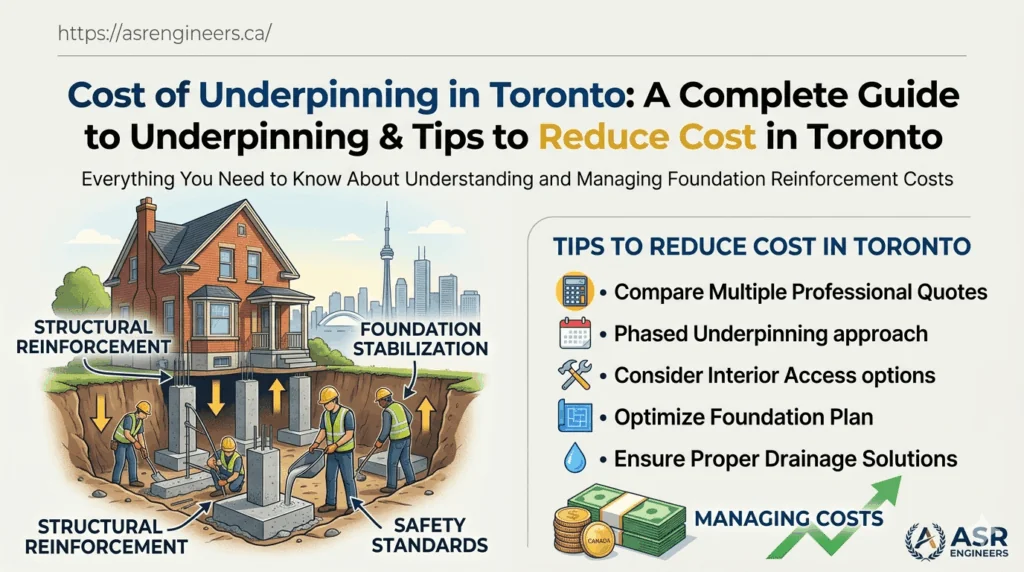
Underpinning is an essential process for strengthening and stabilizing foundations, particularly in older Toronto homes facing structural issues. However, the cost of underpinning in Toronto can vary significantly based on multiple factors, making it crucial for homeowners to understand what to expect.
This comprehensive guide explains the underpinning process, cost factors, and offers actionable tips to help you reduce your underpinning expenses. Whether you’re navigating foundation repairs for the first time or seeking cost-effective solutions, this resource delivers valuable insights tailored to Toronto’s unique housing landscape.
Key Highlights
- Underpinning strengthens and stabilizes foundations in Toronto homes, addressing structural issues and boosting long-term property value.
- Common underpinning solutions include traditional underpinning, bench footing, and basement lowering, each tailored to specific home needs.
- The cost of underpinning is influenced by project size, soil conditions, basement depth, foundation complexity, and chosen repair methods.
- Cost-saving strategies include early planning, obtaining multiple quotes, bundling repairs, and carefully selecting experienced underpinning contractors.
- A thorough assessment and a detailed project checklist are vital to managing underpinning costs and achieving lasting basement stability.
Understanding Underpinning: Foundations and Basement Stability
Toronto’s older homes, as well as new builds, often require specialized solutions to maintain foundation strength and basement stability.
Understanding the methods and benefits of underpinning is essential for homeowners aiming to achieve structural longevity, address common repair needs, and unlock their basement’s full potential.
Basement underpinning isn’t just about fixing foundational issues, it’s a strategic investment in the structure’s integrity, basement usability, and overall home value.
From bench footing techniques to comprehensive foundation restoration services, there’s a wide range of underpinning work that bolsters not only foundation repair but also enables basement lowering, improved waterproofing, and modern basement renovations for Toronto homeowners.
How Underpinning Works for Toronto Homes
Underpinning in Toronto homes is a specialized construction process designed to strengthen and stabilize an existing foundation, particularly when it no longer provides adequate support for the basement or structure above.
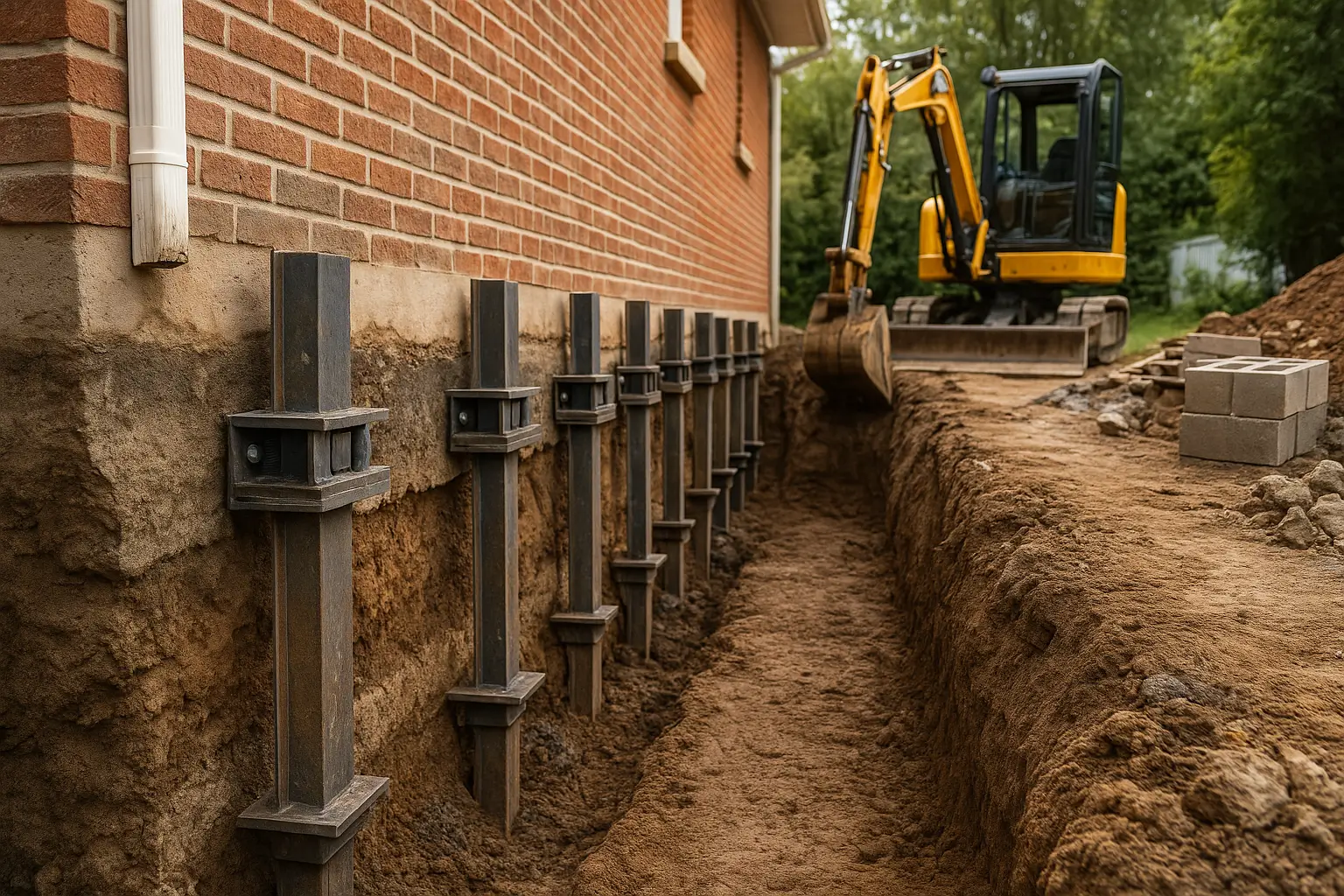
A typical underpinning project involves excavating sections beneath the current footing and pouring new concrete, which extends the depth and width of the foundation.
This process not only increases the foundation’s load-bearing capacity but also addresses structural concerns arising from soil movement, aging materials, or inadequately constructed foundations, issues especially common in Toronto’s diverse housing stock.
The basement underpinning process enables substantial transformation of a home’s lower level. For instance, underpinning permits safe basement lowering, a sought-after solution for homeowners wanting to increase ceiling height and maximize usable basement space without compromising structural integrity.
In Toronto, basement lowering is often combined with underpinning to allow for modern finished basements, in-law suites, or supplementary rental units within older homes. These projects typically start with an assessment from underpinning specialists, who evaluate the structure, foundation, and soil to provide a tailored repair and restoration plan.
Bench footing is another underpinning technique tailored for some Toronto basements, offering a cost-effective alternative to traditional underpinning where site conditions allow. Both bench footing and full underpinning reinforce the existing foundation, ensuring long-term stability and compliance with strict city building codes.
Foundation repair specialists in Toronto employ these underpinning methods to rectify settling, foundation cracks, and bowing walls, problems that can jeopardize both the structural safety and value of the home.
Professional underpinning services in Toronto go beyond simple repairs: they encompass complete restoration of basement structural components, installing proper drainage, and correcting any issues with water ingress or moisture that threaten the foundation.
The complexities of each underpinning project demand a tailored approach because Toronto’s neighborhoods feature a range of soil types, basement depths, and architectural ages. Properly executed underpinning stabilizes the entire home, prevents costly repairs in the future, and opens up new possibilities for basement use and layout.
Ultimately, for Toronto homeowners, understanding how underpinning, foundation repair, basement lowering, and specialized structural solutions work together is key to protecting their investment and ensuring long-term basement and foundation stability.
Key Reasons for Underpinning in Toronto
Toronto’s unique housing market and aging structures make underpinning a critical solution for many homeowners. Whether you’re facing persistent basement issues or seeking foundation repair to add value, underpinning can resolve underlying structural concerns while enhancing usable basement space.
This process isn’t just about addressing current foundation problems; it secures your home’s future, offering longevity, improved safety, and functional benefits.
Everything from basement lowering to restoration and crawlspace repair becomes feasible with professional underpinning work. Understanding the core reasons underpinning might be necessary is essential to making informed decisions on cost, services, and the right restoration approach for your Toronto property.
Common Basement Issues Solved by Underpinning
Basement underpinning in Toronto is often the go-to solution for a variety of pervasive basement issues that trouble both historic and newer properties alike. One of the leading motivators for underpinning work is persistent foundation instability, manifesting as cracks, settling, bowing walls, or uneven floors.
These problems typically arise from shifting soils, inadequate original foundation construction, or years of moisture infiltration, all of which are prevalent in Toronto due to its diverse geology and unpredictable weather.
Foundation repair through underpinning doesn’t just patch over superficial problems; it gets to the core structural deficiencies, reinforcing the building’s foundation for long-term reliability.
Homeowners facing water ingress and chronic basement dampness also turn to basement underpinning as part of an integrated restoration plan. Toronto’s older crawlspace and basement configurations can make water control and drainage difficult, leaving basements vulnerable to mold, mildew, and decay.
By underpinning and lowering the basement floor, contractors can install modern drainage systems and insulation, transforming previously problematic spaces into dry, usable, and energy-efficient areas. If left unaddressed, these issues not only risk structural damage but also drive up the eventual cost of foundation repair and restoration.
Basement lowering, a feature of many underpinning projects in Toronto, solves another major problem: limited or unusable basement headroom.
For households aspiring to convert their basement into additional living space, home offices, or rental units, underpinning and foundation lowering provide the necessary ceiling height without sacrificing structural safety.
This approach often accompanies other services like bench footing or crawlspace excavation, especially where site conditions or budget dictate specific solutions. The result is a safer, more functional, and more valuable basement.
Structural underpinning also tackles isolated yet serious repair needs, such as failing crawlspace supports, problems with aging stone or brick foundations, or restoration after water or fire damage. Each underpinning project is tailored to the property’s unique characteristics, considering everything from the foundation’s depth to existing basement issues, ensuring comprehensive protection for the home.
Professional underpinning services cover everything from the initial inspection to final restoration, using modern techniques that comply with Toronto’s stringent building codes.
Ultimately, underpinning is the linchpin for resolving basement and foundation issues in Toronto homes. Whether the goal is structural reinforcement, increasing basement usability, or preventative restoration, the investment in a well-executed underpinning project pays dividends in safety, long-term repair savings, and increased property value.
By addressing both visible and hidden basement issues, underpinning lays the foundation, literally and figuratively, for a more secure and versatile home environment.
Main Underpinning Methods Used in Toronto
Choosing a tailored underpinning method is crucial for Toronto homeowners aiming to enhance foundation stability, address structural concerns, and modernize their basements. The city’s diverse architectural landscape and wide range of basement and foundation conditions demand specialized solutions.
Leading underpinning methods like traditional underpinning, bench footing, and basement lowering are popular in Toronto due to their effectiveness in both repair and basement renovation scenarios.
Each method offers unique advantages, addressing everything from foundation repair and crawlspace issues to complete basement transformation. Knowing which solution best fits your underpinning project ensures effective foundation work, improved structural resilience, and optimized investment in your home.
Choosing the Right Underpinning Solution for Your Basement
Selecting the ideal underpinning approach in Toronto comes down to a thorough assessment of your basement, foundation, and long-term goals.
The abundance of foundation types, ranging from aging stone or brick supports to modern poured concrete, necessitates a strategy tailored to your property’s unique characteristics. In many older Toronto homes, traditional basement underpinning remains the gold standard for deepening or reinforcing existing footings.
This classic method ensures your structure remains stable, corrects settlement, and enables future basement lowering or renovations. However, its intrusive nature and the need for meticulous engineering and city permits make it especially critical to involve experienced underpinning contractors for effective work.
For homeowners where space or budget constraints are paramount, bench footing has emerged as an innovative and cost-effective underpinning solution. In this method, contractors build a new, secondary foundation next to the existing one, rather than beneath it.
Although bench footing preserves the structural safety of the basement and foundation, it slightly reduces available floor space due to the characteristic “step” it creates along basement walls. Bench footing is especially effective for properties with challenging access or where lowering the basement floor by conventional underpinning would disturb neighboring foundations.
This method not only supports structural stability and restoration but also helps contain the cost of an underpinning project without sacrificing essential repair work.
Basement lowering is often integrated into underpinning projects for Toronto homeowners eager to unlock additional square footage or increase ceiling height. When tied to comprehensive foundation repair or basement renovation plans, lowering the basement floor transforms previously uninhabitable areas into modern, functional living spaces.
This process, although complex, amplifies the benefits of underpinning by addressing crawlspace moisture issues, adding proper insulation, and ensuring all structural upgrades comply with city building codes. Homeowners often use basement lowering alongside underpinning and bench footing, maximizing versatility while maintaining a safe, dry environment.
Professional underpinning services in Toronto stand out by customizing each solution, whether traditional underpinning, bench footing, or a combination.
Restoration, waterproofing, modern drainage installation, and crawlspace repair are woven into each underpinning project, providing a holistic approach that targets both visible and hidden foundation concerns.
These services secure long-term basement usability and protect the homeowner’s investment by significantly reducing future repair costs.
In summary, the best underpinning method for your Toronto property is dictated by a mix of foundation condition, basement configuration, intended use, and budget. Engaging knowledgeable foundation repair experts is crucial for an accurate assessment and successful outcome.
Whether you’re addressing urgent repair needs, planning a major basement renovation, or embarking on a substantial structural restoration, choosing the right underpinning solution ensures your Toronto home’s foundation will remain robust, your basement functional, and your investment well-protected for decades to come.
Underpinning Costs: What Affects the Price per Square Foot?
After exploring the functionality and importance of underpinning for Toronto basements, it’s crucial to understand how underpinning costs are determined. The cost of underpinning in Toronto isn’t a fixed rate; it’s shaped by multiple factors including property size, basement depth, soil conditions, and whether you’re also pursuing basement lowering or foundation repair as part of the renovation.
Homeowners often ask about the price per square foot, but the total underpinning cost can vary based on both visible and hidden challenges beneath the surface. By uncovering what major factors drive the underpinning range, Toronto residents can make informed decisions and plan more accurately for their basement projects.
Major Factors Influencing Underpinning Cost in Toronto
The underpinning cost in Toronto depends on a complex mix of construction and property-specific considerations, every underpinning project is slightly different, and the final cost toronto homeowners pay per square foot can vary widely based on these factors. The most obvious driver is the total area you plan to underpin: more square footage typically means higher overall underpinning costs, but not always at a linear rate.
If your Toronto basement is unusually large or has multiple rooms, the labor and material costs go up, but some expenses, such as engineering and permit fees, which can be streamlined with professional building permit services in Toronto.
Basement underpinning almost always involves excavation, but how deep you need to go depends on your goal. Basement lowering, for example, adds to the cost because it requires removing extra soil and reinforcing the foundation to create greater ceiling height.
Older Toronto basements, with shallow depths and unstable soils, demand extensive foundation repair as well, impacting both the process and total cost. Geological variances across Toronto play a significant role, dense, rocky soil can drive up underpinning costs, while sandy or inconsistent soil conditions may call for specialized shoring or drainage solutions, further affecting both the square foot rate and overall underpinning range.
Structural complications or previous repair attempts can also increase the price per square foot. If your foundation has been patched or modified in the past, or if there are hidden issues such as cracks, settlement, or water damage, the cost of underpinning in Toronto rises due to additional labor and materials for proper restoration.
The complexity of the home’s structure, think multi-story layouts or adjacent property lines, may require creative engineering, underpinning in tighter spaces, and coordination with city inspectors, all of which impact the baseline cost toronto homeowners see in their final estimate.
The type of underpinning solution matters, too. Traditional underpinning is labor-intensive but often essential in older homes. Bench footing offers a lower total cost but reduces usable basement space.
If basement renovation is part of your plan, incorporating waterproofing, insulation, and drainage within the underpinning costs can optimize long-term value but raises the initial outlay.
Furthermore, access to the site, in terms of both ease and urban restrictions, directly influences whether costs will be at the higher or lower end for the Toronto area.
Finally, market fluctuations in material and labor rates across Toronto affect the underpinning cost per square foot.
Professional underpinning contractors with extensive local experience not only provide accurate, upfront estimates on total costs but will also explain how factors such as the property’s age, foundation type, current condition, and proposed renovations influence the final price.
Recognizing these major factors empowers Toronto homeowners with realistic expectations, better budgeting, and a plan that aligns their basement aspirations with an accurate cost for their unique underpinning project.
Tips to Reduce the Cost of Underpinning Your Basement
A successful underpinning project in Toronto doesn’t have to break the bank. By approaching your basement renovation and foundation repair process with smart planning and cost-saving strategies, you can reduce the underpinning cost without sacrificing quality or long-term results.
Whether you’re considering basement lowering, bench footing, or a complete foundation restoration, small decisions made early in the process can yield significant savings.
From understanding service options to using a comprehensive checklist, Toronto homeowners have a variety of ways to control costs and ensure their underpinning investment brings both structural stability and peace of mind.
Downloadable Checklist: Planning Your Underpinning Project
Before diving into the technical aspects of underpinning, it’s essential to have a structured approach that lays out every step of your basement underpinning project.
Toronto homeowners often find that early preparation is the most powerful way to reduce the cost of underpinning, streamline communication with contractors, and avoid unnecessary expenses down the line.
That’s why a detailed checklist can serve as an invaluable guide, ensuring nothing is overlooked, especially with foundation repair, basement lowering, and restoration all in the mix.
Start with a thorough assessment of your basement conditions and foundation. Inspect for visible cracks, water issues, or structural flaws and make a detailed note, as these can directly impact underpinning costs in Toronto.
Consult with multiple underpinning services to gather a range of estimates and clarify which services (such as bench footing or crawlspace repair) are truly necessary for your property.
By comparing options and understanding what each contractor includes in their quote, you empower yourself to negotiate and select the right blend of services without inflating the final cost.
Include regulatory tasks in your checklist, as permits and inspections are mandatory for underpinning projects in Toronto. Early planning for these steps reduces delays and keeps renovation costs predictable.
Scheduling and sequencing work, foundation repair, basement lowering, bench footing, drainage upgrades, minimizes disruption and helps avoid costly overlaps or last-minute changes, maximizing efficiency of both labor and materials.
Homeowners should look for ways to bundle related repairs or upgrades during the underpinning process for added savings. For example, combining foundation restoration and waterproofing with your underpinning project can be far more cost-effective than spacing them out over several years.
Consider energy improvements, too, such as insulation, while your basement is exposed. These forward-thinking decisions can significantly reduce long-term basement costs while improving comfort and home value.
Lastly, review references and the track record of underpinning contractors to ensure reliability and transparency. An experienced team minimizes the risk of surprise repairs and helps you stick to your planned cost of underpinning in Toronto.
By following a comprehensive checklist, from initial planning, through service selection, to post-project evaluation, you ensure your underpinning project achieves the desired foundation repair, basement restoration, and cost savings for years to come.
Conclusion
Understanding the cost of underpinning in Toronto empowers homeowners to make informed decisions and take proactive steps to protect their investment. By researching options, seeking multiple quotes, and working with experienced contractors, you can effectively manage expenses and ensure a successful project outcome.
Prioritizing quality and safety, while also considering cost-saving strategies, will help you achieve long-term stability for your home. For personalized recommendations and a detailed estimate tailored to your property’s needs, consult with trusted local experts who specialize in underpinning services in Toronto.