
Every road you drive on, every bridge you cross, and every dam holding back a reservoir someone designed and built it.
That someone is a civil engineer.
Civil engineering is one of the oldest professions on earth. It shapes the physical world around us, from the pipes that bring clean water into your home to the tunnels that run beneath entire mountain ranges.
But civil engineering isn’t one thing. It’s a broad discipline split into several specialized branches and each branch produces a completely different type of project.
In this guide, we break down every major type of civil engineering project, explain what makes each one unique, and back it up with real-world examples you’ve probably heard of.
What Exactly Is a Civil Engineering Project?
A civil engineering project is any project that involves designing, constructing, or maintaining part of the built environment.
The “built environment” is everything humans have constructed roads, bridges, water systems, airports, tunnels, and more.
Civil engineers don’t just build things. They also:
- Analyze how structures will hold up under load and over time
- Assess environmental impact before breaking ground
- Manage the maintenance of infrastructure after it’s built
- Ensure safety, sustainability, and regulatory compliance throughout
Civil engineering overlaps with several other disciplines architecture, mechanical engineering, urban planning but its focus is always on public infrastructure and the physical world we all share.
How Are Civil Engineering Projects Classified?
Civil engineering projects are typically classified in two ways.
By engineering discipline — each branch of civil engineering handles a specific type of challenge. Structural engineers design load-bearing structures. Geotechnical engineers study the ground. Water engineers manage water systems.
By project sector — some projects are residential, some are industrial, some are massive public infrastructure works funded by governments.
Here’s a quick look at each branch before we go deeper:
Structural engineering covers buildings, bridges, towers, and dams — anything that must carry significant load. Transportation engineering handles roads, railways, airports, and tunnels. Water resource engineering deals with dams, canals, water treatment plants, and flood defense systems. Geotechnical engineering focuses on what happens beneath the surface — soil conditions, foundations, and slope stability. Environmental engineering applies engineering to protect natural ecosystems, think wastewater treatment and green infrastructure. And construction and management engineering ties it all together, overseeing how every project gets planned, funded, and delivered.
Each of these is covered in detail below.
Structural Engineering Projects, What Gets Built and How?
Structural engineering is the most visible branch of civil engineering.
It involves analyzing and designing structures that must carry loads safely whether that load is wind, gravity, seismic activity, or the weight of thousands of people.
What types of structures do structural engineers work on?
- Bridges — suspension, cable-stayed, arch, beam
- High-rise buildings — skyscrapers, towers, stadiums
- Dams — gravity, arch, embankment
- Retaining walls and tunnels
- Industrial frameworks — factories, warehouses
Structural engineers rely heavily on physics and material science. They calculate whether concrete, steel, or composite materials can handle the stresses placed on a structure across its entire service life.
Real example: Burj Khalifa, Dubai
At 828 meters tall, the Burj Khalifa is the tallest building in the world.
Its structural engineers had to solve a unique problem: wind. At that height, lateral wind forces are enormous. The solution was a “buttressed core” system — a Y-shaped floor plan that disperses wind loads and reduces swaying. Special high-strength concrete was used for the lower levels, and the building was designed to withstand the seismic conditions of the region.
Real example: Akashi Kaikyo Bridge, Japan
This is the longest suspension bridge in the world, spanning 3,911 meters across the Akashi Strait.
It was designed to withstand winds of 286 km/h and earthquakes up to magnitude 8.5 on the Richter scale. During construction, an earthquake in 1995 actually shifted the two main towers yet the bridge was redesigned and still completed successfully.
Transportation Engineering Projects – How Do We Move People and Goods?
Transportation engineering deals with the planning, design, and operation of systems that move people and goods from one place to another.
It’s not just roads. Transportation engineering covers:
- Highways and motorways — capacity, safety, traffic flow
- Railways — high-speed lines, metro systems, freight networks
- Airports — runways, taxiways, terminals
- Tunnels — mountain passes, underwater crossings
- Ports and harbors
A transportation engineer doesn’t just design a road. They analyze traffic volume, predict future demand, assess road safety, model pedestrian behavior, and ensure the design meets environmental regulations.
Modern transportation engineering also focuses heavily on reducing emissions, improving public transit, and integrating smart traffic systems.
Real example: The Channel Tunnel, UK–France
The Channel Tunnel is 50.45 km long, with 38 km running underwater beneath the English Channel.
It was one of the most complex transportation engineering projects ever completed. Engineers had to bore through chalk marl from both ends simultaneously and meet in the middle with millimeter precision. Today it carries around 400 trains per day and up to 10 million passengers per year.
Real example: Gotthard Base Tunnel, Switzerland
Opened in 2016, the Gotthard Base Tunnel is the world’s longest railway tunnel at 57.1 km.
It runs beneath the Swiss Alps and took 17 years to build. The project required removing 28 million tonnes of rock and coordinating thousands of workers across multiple construction sites simultaneously.
Water Resource Engineering Projects – How Do We Manage and Protect Water?
Water resource engineering focuses on understanding how water behaves in the natural environment and then designing systems to store, direct, treat, or protect it.
Water is the most critical natural resource on earth. Getting this branch of civil engineering wrong has catastrophic consequences.
What does water resource engineering cover?
- Dams and reservoirs — for hydroelectric power, flood control, and water storage
- Water treatment plants — turning raw water into safe drinking water
- Wastewater treatment systems — safely processing sewage before it returns to the environment
- Irrigation canals — supporting agriculture
- Flood defense systems — levees, storm drains, detention basins
- Coastal and marine engineering — protecting shorelines
Water resource engineers also study groundwater behavior, rainfall patterns, river hydraulics, and the impact of climate change on water availability.
Real example: Three Gorges Dam, China
The Three Gorges Dam on the Yangtze River is the largest hydropower project in the world.
It generates 22,500 megawatts of electricity — enough to power tens of millions of homes. The project required a reservoir stretching 600 km upstream and displaced over 1.2 million people. It involved structural, geotechnical, and water engineering on an enormous scale.
Real example: Thames Barrier, UK
The Thames Barrier in London is one of the largest movable flood barriers in the world.
It was built after the catastrophic 1953 North Sea flood to protect London from tidal surges. The barrier spans 520 meters and can be raised to hold back a wall of water. It has closed over 200 times since opening in 1982.
Geotechnical Engineering Projects And What Role Does the Ground Play?
Every structure sits on the ground. Geotechnical engineering is the branch that figures out whether that ground can actually support it.
Geotechnical engineers study the physical and mechanical properties of soil, rock, and subsurface conditions. They drill boreholes, collect samples, run laboratory tests, and model how the ground will behave under load, over time, and in extreme conditions like earthquakes or heavy rainfall.
What kinds of projects involve geotechnical engineering?
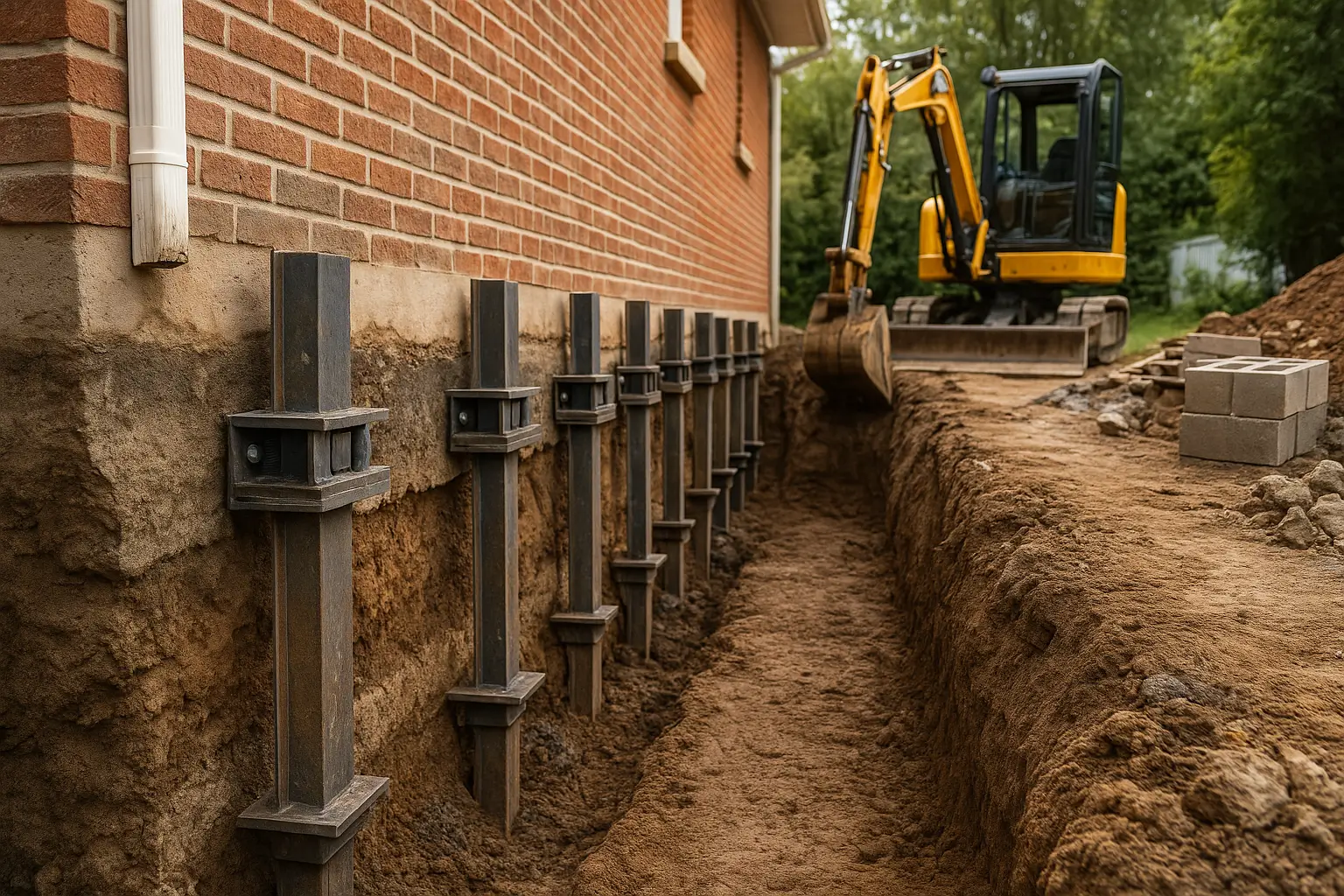
- Foundation design: shallow foundations, deep pile foundations, caissons
- Slope stability: preventing landslides on embankments, hillsides, and excavations
- Tunnel boring: understanding the ground before you drill through it
- Retaining walls: holding back earth around roads, buildings, and waterways
- Embankments and earthworks: for roads, dams, and railways
Geotechnical work is done before almost every major construction project. A structural engineer can design a perfect bridge, but without proper geotechnical data, the foundations could fail.
Real example: Leaning Tower of Pisa, Italy
The Leaning Tower of Pisa is perhaps the most famous geotechnical failure in history and one of the most interesting geotechnical recovery projects.
The tower began leaning during construction in 1173 because the soil on one side was too soft to support the structure’s weight.
For centuries, the lean worsened. In the 1990s, a geotechnical engineering team carefully removed soil from the firmer side of the foundation, reducing the lean from 5.5 degrees to 3.97 degrees and stabilizing the structure for the next 300 years.
Real example: Hong Kong Slope Safety Programme
Hong Kong has more registered man-made slopes than anywhere else in the world.
After a series of catastrophic landslides in the 1970s, the government launched a major slope stabilization program. Geotechnical engineers study, monitor, and reinforce thousands of slopes annually using soil nails, drainage systems, and retaining structures to protect millions of residents.
Environmental Engineering Projects And How Does Civil Engineering Protect the Planet?
Environmental engineering applies engineering principles to protect the natural environment from the impacts of human activity.
It’s one of the fastest-growing branches of civil engineering, driven by climate change, urbanization, and increasing environmental regulations worldwide.
What does environmental engineering cover?
- Wastewater treatment plants: treating sewage and industrial effluent before it re-enters rivers or the sea
- Air quality management systems: reducing industrial emissions
- Landfill engineering: designing safe, contained waste disposal sites
- Soil and groundwater remediation: cleaning up contaminated land
- Green infrastructure: permeable pavements, green roofs, urban wetlands, rain gardens
- Sustainable construction: LEED-certified buildings, eco-friendly materials, low-carbon design
Environmental engineers work closely with structural and water resource engineers on most major infrastructure projects.
Real example: Singapore NEWater Programme
Singapore has almost no natural freshwater sources. For decades, it relied on imported water from Malaysia.
The NEWater programme changed that. Singapore built advanced water reclamation plants that treat wastewater using microfiltration, reverse osmosis, and UV disinfection producing water that meets World Health Organization drinking standards. Today NEWater meets about 40% of Singapore’s water needs. It’s one of the most celebrated examples of environmental and water engineering combined.
Real example: London’s Tideway Tunnel (Super Sewer)
London’s Victorian sewer system was built for a city of 4 million people. London now has 9 million.
Every time it rains heavily, untreated sewage overflows directly into the Thames. The Tideway Tunnel, a 25 km tunnel being bored beneath the Thames, will intercept these overflows and redirect them to a treatment plant. It’s one of the largest environmental infrastructure projects in UK history.
Construction and Management Engineering Who Oversees the Build?
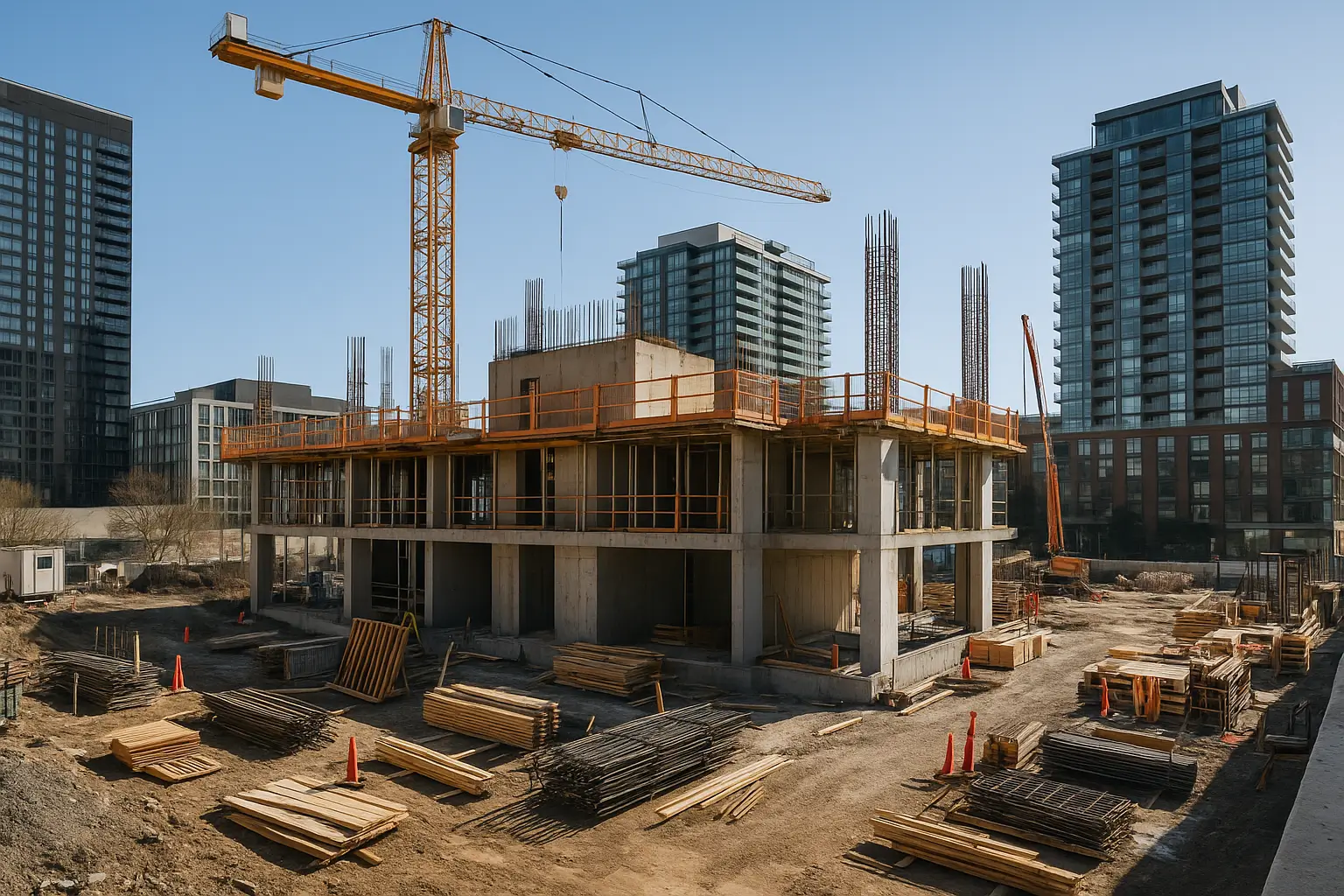
Construction and management engineering is the bridge between the drawing board and the finished structure.
It combines technical engineering knowledge with project management covering planning, budgeting, scheduling, risk management, and quality control across the life of a construction project.
A construction management engineer doesn’t design the dam or the bridge. They make sure it gets built correctly, on time, and within budget.
What does this branch involve?
- Pre-construction planning: feasibility studies, site surveys, cost estimation
- Scheduling and sequencing: determining what gets built in what order
- Resource management: materials, equipment, labor
- Risk management: identifying and mitigating construction risks
- Quality control: ensuring construction meets engineering specifications
- Asset management: maintaining infrastructure over its service life
The rise of public-private partnerships (P3)
Many large civil infrastructure projects are now delivered through public-private partnerships, where a private company funds, builds, and sometimes operates a public project in exchange for future returns.
Real example: I-595 Expressway, Florida
The I-595 Corridor Improvement Project in Florida is a textbook public-private partnership. The state of Florida partnered with a private consortium to widen and upgrade the expressway at a cost of $1.8 billion.
The private partner financed and built the project, and the state repays them over 30 years through availability payments. Florida taxpayers paid nothing upfront.
Real example: Crossrail (Elizabeth Line), London
Crossrail is the largest infrastructure project in European history. It required coordination of over 10,000 workers, 40 contracts, and tunnel boring machines working simultaneously beneath one of the world’s busiest cities.
Managing that complexity across budgets, schedules, stakeholders, and safety requirements, was as much an engineering challenge as the tunneling itself.
What Are Some Famous Real-World Civil Engineering Projects?
Here is a look at some of the most iconic civil engineering projects ever completed, and what makes each one remarkable.
Golden Gate Bridge USA: Built in 1937, it was the longest suspension bridge in the world at the time, stretching 1,280 meters across the San Francisco Bay. It remains one of the most recognized structures on earth.
Panama Canal Panama: A 77 km waterway that connects the Atlantic and Pacific Oceans. When it opened in 1914, it cut the shipping route between New York and San Francisco by over 22,000 km. It’s one of the most consequential infrastructure projects in history.
Burj Khalifa UAE: The world’s tallest building at 828 meters. Its Y-shaped structural design was engineered specifically to manage the extreme lateral wind forces acting on it at that height.
Three Gorges Dam China: The largest hydropower project on the planet, generating 22,500 megawatts of electricity. Its reservoir stretches 600 km upstream along the Yangtze River.
Channel Tunnel UK and France: A 50 km tunnel beneath the English Channel, 38 km of which runs underwater. Engineers bored from both ends simultaneously and met in the middle, beneath an entire sea.
Singapore NEWater Singapore: A national water reclamation programme that transforms treated wastewater into high-grade drinking water using reverse osmosis and UV disinfection. It now meets around 40% of Singapore’s total water demand.
Gotthard Base Tunnel Switzerland: At 57.1 km, it is the world’s longest railway tunnel. It passes beneath the Swiss Alps and took 17 years and 28 million tonnes of excavated rock to reach. Each of these projects required multiple engineering disciplines working together.
That’s a key point in practice, most major civil engineering projects don’t belong to a single branch. They combine structural, geotechnical, water, and management engineering all at once.
What Skills Do Civil Engineers Need Across Different Project Types?
The skills a civil engineer needs depend heavily on their specialization, but there’s a strong common foundation across all branches.
Core technical skills
- Structural analysis: understanding how forces act on materials and structures
- Soil mechanics: for geotechnical work
- Hydraulics and hydrology: for water resource projects
- Material science: selecting the right materials for the right conditions
- Mathematics and physics: the foundation of every calculation
Practical and professional skills
- CAD software: AutoCAD, Civil 3D, Revit for design and drafting
- Analysis tools: STAAD Pro, ETABS, SAFE for structural modeling
- Project management software: Primavera, MS Project for scheduling
- GIS platforms: for mapping, planning, and environmental analysis
- Report writing and technical communication: engineers must explain complex decisions clearly
How do skills differ by branch?
Not every civil engineer needs the same toolkit. A structural engineer spends most of their time on load path analysis and seismic design. A transportation engineer focuses on traffic modelling and pavement design.
Water resource engineers work with hydraulic modelling and flood risk assessment tools. Geotechnical engineers are constantly running site investigations and slope stability analyses. Environmental engineers need expertise in impact assessment and pollution control systems. And construction management engineers live in the world of contract management, cost control, and programme scheduling.
The common thread is problem-solving. Every branch of civil engineering, whatever its specialty, is fundamentally about finding the safest, most efficient, and most sustainable solution to a physical challenge.
Civil engineering also increasingly demands knowledge of green building standards like LEED and BREEAM, and familiarity with smart infrastructure technologies as cities modernize.
Frequently Asked Questions
What are the main types of civil engineering projects?
The main types are structural engineering projects (bridges, buildings, dams), transportation engineering projects (roads, railways, tunnels), water resource engineering projects (dams, water treatment plants), geotechnical engineering projects (foundations, slopes), environmental engineering projects (wastewater systems, green infrastructure), and construction and management engineering (project delivery and oversight).
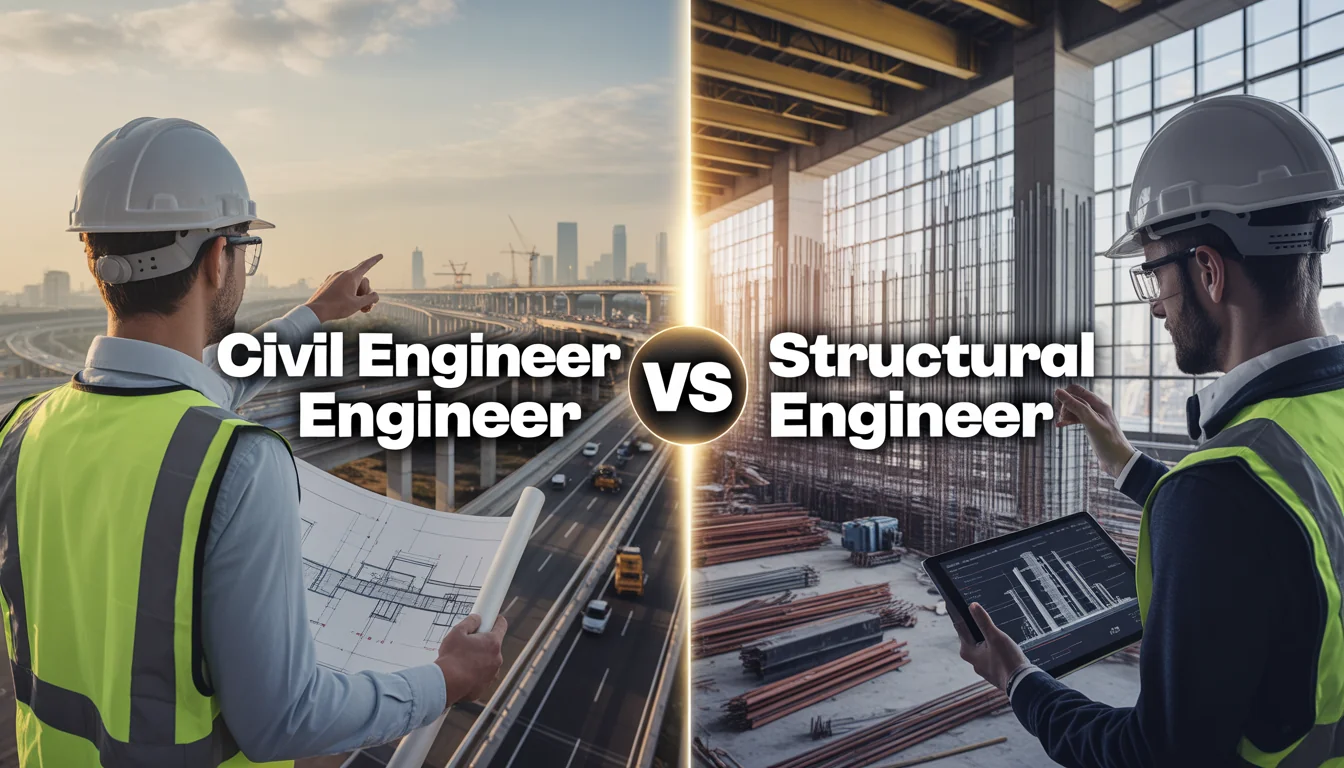
What is the difference between structural and civil engineering?
Civil engineering is the broader discipline — it includes structural, geotechnical, transportation, water, and environmental engineering. Structural engineering is one branch of civil engineering that focuses specifically on designing structures that safely carry and transfer loads. All structural engineers are civil engineers, but not all civil engineers are structural engineers.
What are some famous examples of civil engineering projects?
Some of the most iconic examples include the Golden Gate Bridge (USA), the Channel Tunnel (UK–France), the Three Gorges Dam (China), the Burj Khalifa (UAE), the Panama Canal, Singapore’s NEWater programme, and the Gotthard Base Tunnel in Switzerland.
What is the largest type of civil engineering project?
Infrastructure projects — particularly hydropower dams, railway networks, and highway systems — tend to be the largest by cost and scale. The Three Gorges Dam and China’s national high-speed rail network are among the largest civil engineering undertakings in human history.
How long does a civil engineering project take?
It depends entirely on scale and complexity. A small road improvement might take weeks. A major dam or tunnel can take 10 to 20 years from planning to completion. The Crossrail project in London, for example, took over 15 years. The Gotthard Tunnel took 17 years. Planning, regulatory approval, environmental review, and funding processes all add significant time before construction even begins.
What is the role of geotechnical engineering in civil projects?
Geotechnical engineering investigates the soil and rock beneath a proposed project site. It determines whether the ground can support the structure, how foundations should be designed, and what risks exist from settlement, landslides, or earthquakes. Almost every major civil engineering project requires geotechnical investigation before design begins.
Conclusion
Civil engineering is the discipline that builds the world we live in. From the water that comes out of your tap to the highway that connects cities, to the flood barrier protecting millions of people, each of these exists because a civil engineer designed, analyzed, and managed its construction.
The types of civil engineering projects are as diverse as the challenges they solve. Structural projects push the limits of what materials can hold. Transportation projects connect communities and economies.
Water resource projects protect the most essential substance on earth. Geotechnical engineering ensures everything stays standing. Environmental engineering makes sure the work doesn’t cost us the planet.
And behind all of it, construction and management engineering keeps the whole operation on track. Understanding these branches isn’t just useful for engineers. It’s useful for anyone who wants to understand how the modern world actually works.