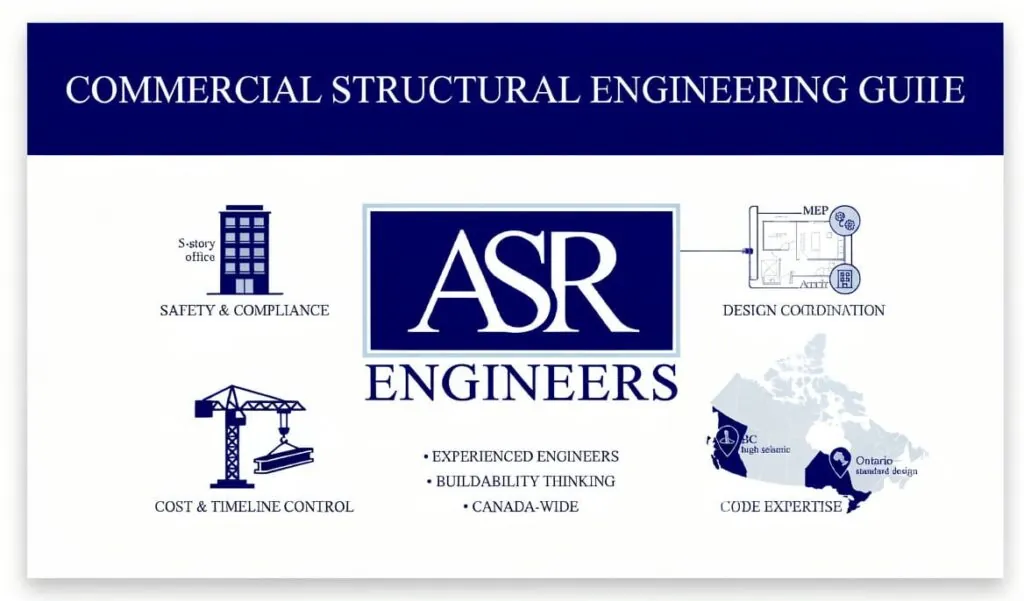
Most building owners focus on aesthetics, budget, and timeline. Few understand the invisible framework that determines whether a project succeeds, or fails catastrophically. Structural engineering isn’t bureaucracy. It’s the foundation of safety, compliance, and cost control.
This guide explains how structural design decisions, building codes, and engineer selection directly impact your project’s timeline, cost, and safety. Whether you’re developing a 5-story office, a retail complex, or a warehouse in Canada, understanding these three factors puts you in control.
What Is Commercial Structural Engineering, and Why Does It Actually Matter to Your Project?
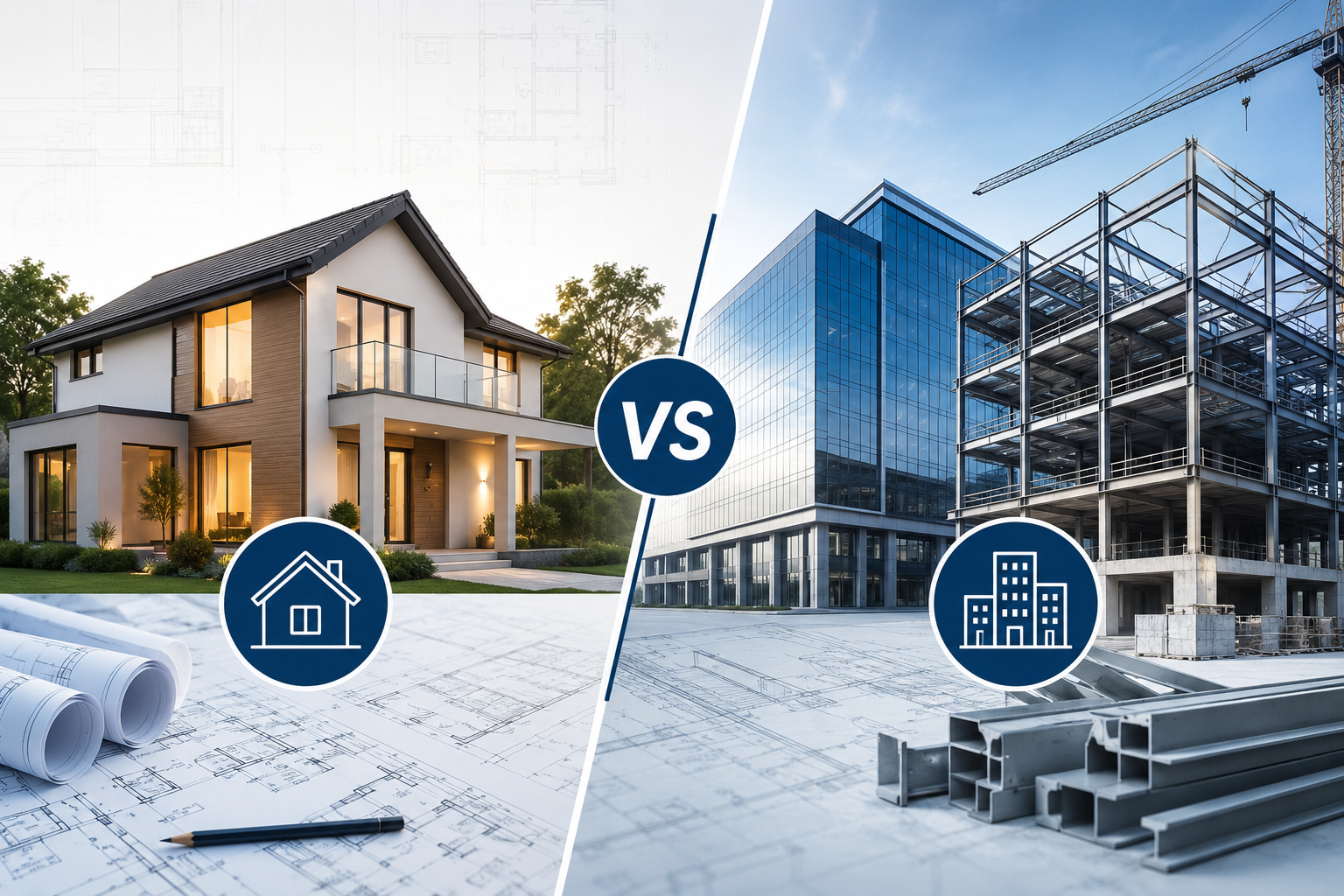
Structural engineering for commercial buildings is the discipline of designing load-bearing systems that are safe, efficient, and compliant. Unlike residential work, commercial projects involve larger spans, heavier occupancy loads, stricter fire-safety codes, and complex mechanical integration.
Your structural engineer doesn’t just draw blueprints. They analyze how gravity, wind, seismic forces, and occupancy loads affect your building. They choose materials. They design connections. They ensure your building will stand safely for decades.
Why it matters: A poor structural design costs you 15–30% more in material, creates construction delays, triggers permit rejections, and leaves your building vulnerable to failure. Good structural design optimizes cost, accelerates construction, and delivers compliance on the first submission.
How Does Structural Design Directly Impact Your Project Timeline and Construction Efficiency?
Structural design decisions made during the schematic phase cascade through your entire project. The engineer’s material choice, span optimization, and connection strategy determine how fast you build and how efficiently your resources are used.
Material selection shapes your timeline
Steel offers long spans and fast erection, reducing construction duration significantly. Concrete naturally achieves fire ratings without additional treatments but requires longer curing time. Mass timber (CLT) combines speed with sustainability benefits but works best within specific span parameters.
Span optimization is critical
The engineer evaluates whether longer or shorter spans serve your building better. Optimized span design reduces unnecessary material use while maintaining structural integrity. Efficient span planning means you get exactly what your building needs—nothing more, nothing less.
Design coordination prevents complications
When structural, MEP (mechanical, electrical, plumbing), and architectural disciplines coordinate during design, conflicts are caught early. This coordination prevents costly field changes later. Early detection of incompatibilities means contractors execute smoothly without expensive rework or schedule disruptions.
Buildability thinking matters
The right structural engineer considers how your design will actually be constructed. This forward-thinking approach prevents surprises that would otherwise waste resources and delay the job site.
Smart structural design means efficient resource use, faster construction timelines, and fewer unexpected complications.
What Building Codes and Regulations Actually Govern Your Commercial Project?
Building codes aren’t arbitrary restrictions. They’re minimum safety standards based on decades of engineering failures and research. In Canada, the National Building Code (NBC) sets the baseline; provinces adopt and adapt it.
NBC (current standard)
Covers structural design requirements, load combinations, safety factors, fire-resistance ratings, and accessibility. Most provinces have adopted NBC 2020 by now, but some still enforce 2015 editions.
Provincial variations matter significantly
British Columbia requires higher seismic design standards than Ontario adding 15–30% to structural costs in BC coastal areas. Alberta has lower snow loads in southern regions but higher wind loads on prairie sites. Understanding your provincial code before design starts prevents costly revisions.
Load requirements define your structure
Dead loads (building weight) are calculated precisely. Live loads (occupancy) vary: standard offices = 2.4 kPa; warehouses with storage = 4.8–9.6 kPa. Environmental loads (snow, wind) vary by region. Snow load in Vancouver is 0.9 kPa; in Northern Alberta, 3.5+ kPa.
Underestimate live loads, and your structure fails. Over-design, and you waste money. The structural engineer’s job is sizing members correctly, not conservatively, correctly.
Fire-resistance ratings (FRR)
Depends on building height and occupancy. A 10-story office requires 2-hour FRR; a 25-story tower requires 3–4 hours. Concrete naturally provides this; steel requires fireproofing. This choice affects material selection and cost.
How Does Seismic Design Affect Your Building, and When Is It Required?
Seismic design becomes critical when your building sits in a seismically active region. The NBC assigns every Canadian location a seismic design category (SDC) that determines whether specialized earthquake-resistant design is necessary.
Seismic design categories determine requirements:
- SDC 1 (low risk): Ontario, Quebec, Atlantic Canada, standard design sufficient
- SDC 2 (moderate): Alberta, Saskatchewan, ductile moment frames required
- SDC 3 (high risk): Southern BC, coastal areas, advanced lateral-load design needed
- SDC 4 (very high): Vancouver, critical facilities, specialized systems required
Design strategies vary by location. Ductile moment frames (steel or concrete beams/columns that bend safely under seismic forces) work for moderate seismic zones. Shear walls (stiff concrete walls) are efficient for tall buildings in higher-risk areas. Base isolation systems (building sits on specialized bearings) protect critical facilities by isolating them from ground motion.
If you’re developing in BC or near a seismic zone, understanding these requirements during the planning phase is essential. Early consideration of seismic needs shapes your entire structural design strategy efficiently. Accounting for seismic design early prevents the need for expensive redesigns later.
What Happens During the Structural Design Process, and How Long Does It Take?
Design happens in five phases. Understanding each prevents surprises.
Pre-design and Schematic (2–6 weeks)
Site assessment, preliminary loads, geotechnical planning, structural system proposal. Deliverables: system sketch, cost estimate, timeline.
Design Development (6–10 weeks)
Full structural analysis using software (ETABS, SAP2000), detailed calculations, connection detailing, optimization. This phase determines if the design is efficient.
Construction Documents (4–8 weeks)
Tender-ready drawings, specifications, shop drawing instructions. Clarity here reduces on-site conflicts.
Permits and Approvals (4–12 weeks)
Building official review. Timelines vary by jurisdiction. BC and Ontario can be 6–10 weeks; some rural areas, 2–4 weeks. Complex projects or seismic designs add time.
Construction Administration (6–24 months)
Weekly site inspections, shop drawing approvals, change order evaluation. The engineer oversees implementation.
Total timeline design to permit: 6–18 months typical. Rushing causes errors; padding adds cost.
How Do You Choose the Right Structural Engineer for Your Project?
Choosing the right structural engineer is one of your most important decisions. The wrong choice creates coordination problems, delays, and unnecessary complications.
Non-negotiable requirements
Licensed professional engineer (P.Eng. in Canada). Verify this through your provincial regulatory body. Professional liability insurance (minimum coverage shows accountability).
What actually matters: Does the firm have experience with your specific building type? Have they designed 5-story offices like yours? Warehouses with similar technical demands? Buildings in your province? Experience with local code authorities and regional construction practices is valuable.
Timeline realism
Ask how long structural design typically takes for projects like yours. Honest, realistic estimates suggest competence. Estimates that seem too fast often indicate corners will be cut.
Collaboration approach
Do they engage architects at the very beginning of the project? Do they maintain regular coordination meetings? Early involvement prevents conflicts that would otherwise emerge later.
Value over lowest price
An experienced engineer who optimizes your design and maintains strong coordination delivers better results than the cheapest option. Inexperienced engineers produce inefficient designs that create problems during construction.
Red flags
Engineers who are significantly cheaper than competitors, who seem evasive about experience, or who don’t discuss your project context specifically.
Good signs
Firm provides references, shows completed project examples, discusses your building’s unique requirements thoughtfully.
Choosing an experienced, collaborative engineer is an investment in a smoother, better-coordinated project.
What Factors Affect Your Design Timeline and Resource Allocation?
Design timelines vary significantly based on project complexity and coordination efficiency. Understanding what influences your timeline helps you plan effectively.
Factors that accelerate design: Clear, detailed architectural schematic inputs speed structural development. Early coordination between architect, structural engineer, and MEP teams resolves questions upfront rather than during construction documents.
Simple, logical building geometry (repeating bay layouts) streamlines analysis. Straightforward geotechnical conditions (known soil properties) eliminate surprises. Local code familiarity (engineer knows regional requirements) reduces research time. Early building official engagement clarifies expectations before formal submission.
Factors that extend design timelines: Architectural changes during design cascade to structural revisions. Unexpected site conditions (discovering poor soil, buried utilities, or constraints) require investigation and redesign.
High-rise buildings require more extensive analysis and code scrutiny. Complex sites with multiple jurisdictions mean navigating different code requirements. Building official questions and requests require engineer response and modifications. Scope changes (client requests additional analysis or alternative designs) add investigation time.
The coordination advantage: Projects with excellent discipline coordination, where structural, MEP, and architectural teams meet regularly during design typically progress faster and smoother than siloed design approaches.
Planning for realistic design timelines, coordinating early with all disciplines, and establishing clear communication with building authorities prevents delays and keeps projects on track.
Final Thoughts
Structural engineering determines whether your commercial project succeeds or stumbles. Design decisions, code compliance, and engineer selection directly control cost, timeline, and safety.
Engage a qualified, experienced structural engineer early. Demand coordination with architects and MEP. Budget realistically (3–6% of construction cost). Verify provincial code requirements before design. Choose value over price.
At ASR Engineers, we specialize in commercial structural design across Canada from seismic-critical BC projects to prairie warehouses to Ontario mixed-use developments. We engage early, coordinate collaboratively, and deliver designs that optimize your timeline and budget without compromising safety.
FAQs
When Should I Hire a Structural Engineer for My Commercial Project?
Hire a structural engineer at the concept stage to optimize design, materials, and coordination early. Waiting until after final plans reduces efficiency and increases costly redesign risks.
Does Every Commercial Building Modification Require a Structural Engineer?
Yes, if changes affect structure like load-bearing walls, layouts, or added loads an engineer is essential. Even small modifications can impact safety and code compliance.
How Do I Know Which Building Code Applies to My Project?
Your code depends on location, usually the National Building Code with local amendments. Your engineer and local authority confirm the exact applicable version before design starts.
Can Good Structural Design Actually Reduce Construction Timeline?
Yes, efficient structural design improves buildability and coordination, reducing delays and rework. Early integration with MEP systems speeds up on-site construction.
What’s the Difference Between a Qualified Structural Engineer and an Average One?
A qualified engineer designs for efficiency, compliance, and coordination with strong project-specific experience. An average one may meet code but often lacks optimization and constructability focus.